
Research at Grenoble Quantum Dots Lab


Synthesis
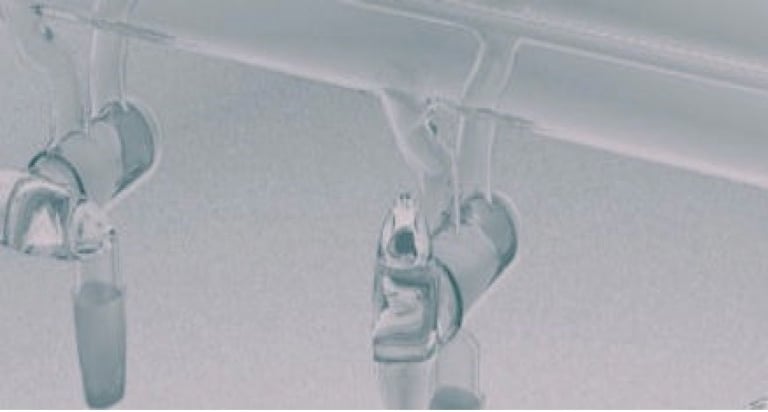
Developing new methods for quantum dot synthesis.

Materials families
The precision synthesis of “greener” QDs, i.e., semiconductor nanocrystals exempt of toxic heavy metals, is in the basis of our research. To get understanding of the fundamental reaction mechanisms governing the nucleation and growth of QDs, we apply complementary ex-situ and in-situ characterization techniques to assess the evolution of the optical, electronic and structural properties and to get a clear picture of the surface state of the QDs.
In collaboration with Marie Carrière (SyMMES-CIBEST), we study the toxicological profile of our materials in the pristine state and after ageing/ accelerated weathering.
We also evaluate the potential of the obtained QDs for diverse applications, in particular biological imaging and detection, LEDs, solar cells, photodetectors, and photocatalysis.
The III-V semiconductor family (InP, InAs, InSb) allows covering most of the visible range as well as the NIR/SWIR region up to around 2 microns. Due to their more covalent character and higher oxidation sensitivity, the synthesis of III-V QDs is more challenging than that of established metal chalcogenide QDs, such as CdSe and PbS.
Silver chalcogenides are promising alternative materials enabling NIR absorption and emission. To go to the blue and UV range, we developed the synthesis of gallium sulfide QDs and their core/shell structures.
Binary quantum dots
Ternary/mutinary quantum dots
The use of ternary or multinary metal chalcogenide QDs opens up a large space of materials presenting suitable band gap energies for covering the visible and NIR/SWIR range. This research started in 2007 when we found a method to synthesize highly luminescent CuInS2/ZnS core/shell QDs applicable for in vivo biological imaging. Currently we are focusing on the synthesis of diverse types of multinary QDs (e.g., Cu-In,Ga-S, Ag-In-S, Ag-Bi-S) both in batch and in continuous flow, and on the development of methods to reduce their PL emission linewidth, recently achieved in blue-emitting AgGaS2/GaSx nanocrystals.
Metal halide perovskites
Research on this class of materials was triggered in 2009 with the discovery that methylammonium lead iodide could efficiently sensitize TiO2 in mesoporous solar cells. Nowadays power conversion efficiencies exceeding 25% have been reported with lead halide perovskites, which represents an unprecedented fast rise. Around 2015 the chemical synthesis of highly luminescent lead halide perovskite nanocrystals has been reported, which exhibit many intriguing features not observed with conventional binary and multinary QDs. Our research in this field covers both thin films and perovskite NCs. We perform advanced structural analyses, in particular using laboratory and synchrotron X-ray diffraction techniques, to assess key parameters influencing the microstructure and governing the growth of perovskite thin films (coll. Stéphanie Pouget, IRIG-MEM). Another important aspect concerns the development of lead-free perovskites, such as bismuth-based nanoparticles for photocatalytic applications.



Covers
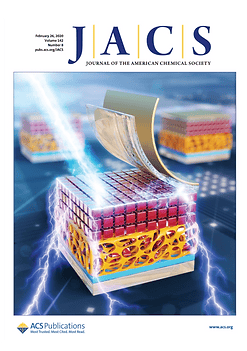
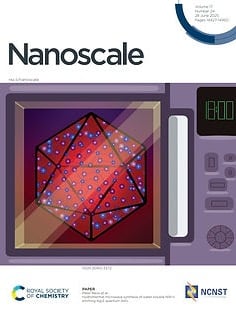
Our research on the journal covers